
QBE Highlights How the Increase in Solar Panel Installations Has Led to a Rise in Fires
Like it? Share it!
18 August 2026
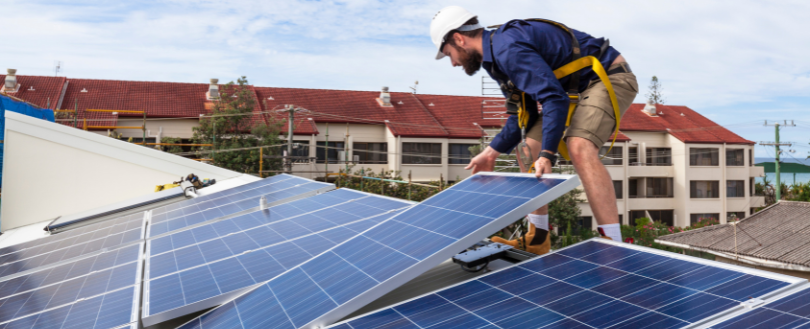
New Research from QBE Insurance Group has highlighted a rise in fires involving solar panel installations across the UK.
Data obtained through Freedom of Information requests to UK Fire and Rescue Services shows that 212 fires involving solar panels were attended in 2025, compared with 91 in 2022, an increase of 133%. Over the same period, solar panel installations increased by 52%.
The findings come as solar deployment continues to grow. The UK surpassed two million installations in March 2026, with more than 2.04 million recorded by May.
Safety and risk mitigation
Adrian Simmonds, risk manager at QBE Insurance, stated: “Solar energy is a key component of the UK’s clean energy future and QBE fully supports its rapid expansion, but safety and risk mitigation must be the priority.”
Simmonds continued: “Our research shows that fires are rising at more than double the rate of installations, with DC cabling and connectors being the leading cause. These fires are often spreading to the wider building. It’s clear that installation quality and fire safety are not keeping pace with the speed of deployment. Safe solar panel installation and maintenance procedures are essential when it comes to reducing the number of fires.”
Residential buildings accounted for 102 solar-related fires in 2025. Commercial properties also saw a significant increase, rising from 33 incidents in 2024 to 48 in 2025, while incidents in industrial buildings increased from six to 14.
This growth is particularly relevant as the Government looks to expand rooftop solar through its Clean Power 2030 plans and the Future Homes Standard.
Installation and maintenance remain critical
QBE’s data identified DC cabling and connectors as the leading reported cause of solar-related fires in 2025, accounting for 49 incidents, up from 26 in 2024. Other reported sources included solar panels themselves (36), battery banks (23) and inverters (19).
Simmonds explained: “The rise in fires linked to DC cabling and connectors points directly to installation quality. Loose connections, damaged wires and faulty wiring lead to arc faults and other electrical failures. Every solar panel system, whether on a home, a warehouse or a solar farm, should be installed using MCS accredited installers and consistently maintained.”
The findings reinforce the importance of appropriate system design, installation, inspection and maintenance, particularly as battery energy storage becomes increasingly common.
Lithium-ion batteries present specific fire safety challenges due to the risk of thermal runaway, which can result in rapidly developing fires that are difficult to control.
The potential severity of incidents is also increasing. Fires that spread beyond the solar installation rose from 33 in 2022 to 88 in 2025.
Key recommendations
In conclusion, Adrian Simmonds observed: “Battery storage is now commonplace in new solar systems, but installation location is a critical and often overlooked risk factor. Units placed in confined or hard-to-access spaces, combined with infrequent inspection, create the conditions for fires that are both more likely and, what’s more, harder to contain.”
QBE recommends that homeowners and businesses:
- Use appropriately certified and competent solar installers
- Undertake regular inspection and maintenance of installations
- Ensure DC cabling and connectors are correctly specified, installed and inspected
- Ensure isolation, firefighters’ switches and arc-fault detection systems are correctly installed and accessible
- Consider roof combustibility, separation distances and suitable fire-resistant barriers
- Install battery storage in well-ventilated, unobstructed locations that remain accessible for inspection and emergency response
- Inspect systems following extreme weather, including high winds, hail and flooding.
As solar PV and battery storage become increasingly common across residential, commercial and industrial buildings, ensuring systems are properly designed, installed and maintained will be essential to managing the associated fire risks.
View the source.
Our eNews provides regular insight into industry trends, news headlines, and product and service information. For more articles like this Subscribe to our enews.