

Material Focus Research Reveals £2.37 Billion Cost of Battery Fires
Like it? Share it!
24 November 2026
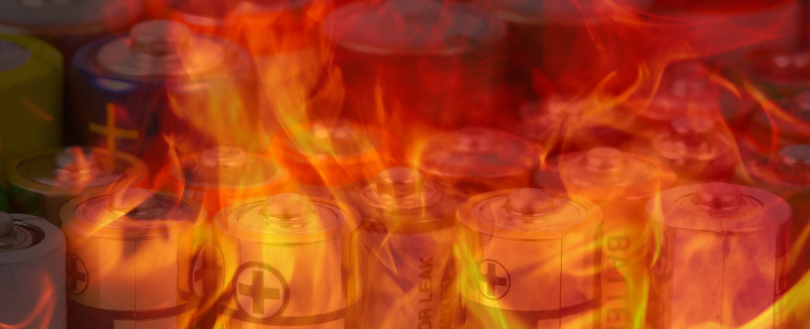
New research published by not-for-profit organisation Material Focus has revealed that a battery fire occurs every three hours in the UK, with an estimated annual economic impact of £2.37 billion – equivalent to £82 per household.
Data from the Recycle Your Electricals campaign shows that battery fires reached a record high of 2,839 incidents in 2025, representing a 135% increase. The findings highlight a growing fire safety concern, with 91% of local authorities reporting that battery fires are an increasing challenge.
These incidents present significant risks to waste sector workers, firefighters and the wider public, reinforcing the importance of responsible battery disposal, effective fire prevention and increased public awareness.
Many everyday electrical products, including electric toothbrushes, vapes and power banks, contain hidden lithium-ion batteries. When incorrectly disposed of in general household waste, these batteries can become crushed, punctured or damaged during waste collection and processing, potentially resulting in fires that spread rapidly and are particularly challenging to extinguish.
The economic impact of battery fires
The estimated £2.37 billion annual economic impact includes damage to vehicles and facilities, disruption to waste collection services, diverted waste and emergency response costs.
With the replacement cost of a single waste collection vehicle reaching nearly £540,000, the financial implications for the waste industry are significant. However, it is not only major incidents that contribute to these costs. Smaller, more frequent fires also place considerable pressure on businesses through ongoing repairs, clean-up operations and operational downtime.
Alice Tapper, the personal finance expert and author, noted: “Battery fires cost the UK £2.37 billion per annum. That’s an enormous cost, but to put that into perspective in terms of what it means for you and me, it’s the equivalent of £82 for every household. That’s money our local councils and waste services are spending on preventable fires and, one way or another, that cost comes back on all of us.”
Tapper continued: “There have been two bin lorry fires near me in Brixton in the past year. I’ll admit that I’ve been guilty of binning electricals without a second thought. It’s easily done, whether it’s an old electric toothbrush, a power bank that no longer holds its charge or that one wireless earbud that’s been sitting in a drawer since you lost the other one.”
In addition, Tapper commented: “The good news is that it’s easy to take action. We can all start spotting the hidden batteries in the everyday things we own and make sure we recycle them. It’s a small change that will prevent fires, keep bin crews safe and bring down this huge shared cost.”
The financial damage can continue long after the flames are extinguished through higher insurance costs, lost working time and disruption to local waste services.
Megan Dunford, head of large and complex property claims at Zurich UK, stated: “The continuing growth in waste fires involving lithium-ion batteries is a huge concern. Fires involving these batteries often burn more fiercely, create toxic fumes and are harder to put out, which means more danger for firefighters, more disruption for local areas and higher costs to clear up.”
Dunford concluded: “As insurers, we’re working hard on how to help reduce these risks and to repair the damage that’s done, but what’s really needed is for people to ensure these batteries are sent for recycling rather than being thrown away with general waste.”
Increasing risks to workers and communities
Battery fires are not confined to waste and recycling facilities. Incidents involving waste collection vehicles now account for 26% of reported battery fires, compared with 19% in 2023/24.
These incidents present significant occupational risks to waste sector employees, who may be required to respond to rapidly developing fires. In some circumstances, burning waste may need to be unloaded in residential areas, creating additional risks for local communities and responding fire and rescue services.
The wider consequences can include road closures, disruption to local services and exposure to smoke and fumes. At waste and recycling facilities, fires can result in extensive property damage, prolonged operational closures and potential job losses.
James Bywater, waste fires and recycling lead for the National Fire Chiefs Council, explained: “The rise in waste fires caused by lithium-ion batteries is concerning as many of these incidents are easily preventable. A battery thrown into a household bin can cause a serious fire that puts people at risk and, in some cases, takes days to fully extinguish. By disposing of batteries responsibly and using local recycling services, people can help prevent fires, protect their communities and reduce avoidable call-outs to Fire and Rescue Services.”
The importance of fire prevention and responsible disposal
Further research conducted as part of the Recycle Your Electricals campaign found that almost one billion electrical items and loose batteries were incorrectly disposed of over the past year, including more than 196 million vapes.
When lithium-ion batteries are damaged, they can undergo a process known as thermal runaway, potentially leading to rapid ignition, fire spread and subsequent reignition. The nature of these incidents can make firefighting operations particularly challenging, with prolonged exposure to smoke and fumes potentially affecting surrounding communities.
Preventing battery-related fires requires a collaborative approach across industry, local authorities and the public. Greater awareness of the risks associated with lithium-ion batteries, alongside responsible disposal practices and appropriate fire safety measures, is essential to reducing the frequency and impact of these incidents.
Electrical items and batteries should never be disposed of in general household waste. Broken electrical items should be taken to designated recycling points, while working products should be reused or donated wherever possible.
With approximately 30,000 electrical recycling points across the UK, most people live within 15 minutes of a suitable recycling location.
The findings reinforce the importance of continued education, industry collaboration and proactive fire prevention measures in protecting people, property and the environment.
View the source
Our eNews provides regular insight into industry trends, news headlines, and product and service information. For more articles like this Subscribe to our enews.