

Lessons Need to be Learned From Wildfires, Minister Admits
Like it? Share it!
21 August 2026
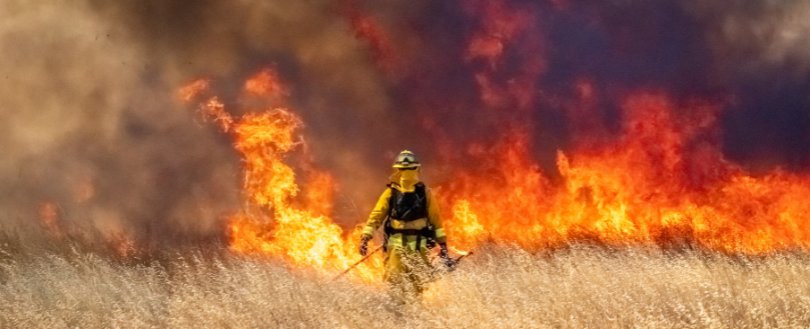
The response to the ongoing wildfires in South Wales has demonstrated the significant demands that large-scale incidents can place on fire and rescue services, while highlighting the importance of ensuring the UK is prepared for an increasing wildfire risk.
During a visit to Treherbert, Rhondda Cynon Taf, Welsh Government minister Dafydd Trystan Davies praised the “remarkable response” of firefighters, military personnel and supporting fire and rescue services as crews continued to tackle a number of grass fires across South Wales.
Davies said: "We need to learn from every experience we have to make sure that we respond in the most effective and prompt way possible to the challenges.
"In an era of climate change, we're going to be facing hotter summers, we're likely to see more wildfires."
The minister for government effectiveness said a fire summit would be held later this year to "learn the lessons we can from this summer".
He said he had spoken with personnel from SWFRS and the Army, as well fire services from across England that were brought in to "respond effectively to the major challenge".
Around 200 Army personnel were deployed to support the response, helping to establish firebreaks and providing logistical assistance, including water distribution. Fire and rescue services from across England have also provided additional support.
South Wales Fire and Rescue Service (SWFRS) confirmed that the agreed period of military support was due to formally conclude on Wednesday, although two helicopters would continue to undertake essential firefighting and reconnaissance operations.
Crews remained at incidents in Blaenavon, Dowlais and Llwyn-on Reservoir, while fires at Wattsville and Cwm in Ebbw Vale continued to be monitored.
The scale and duration of these incidents underline the considerable operational pressures wildfires can create for fire and rescue services and their personnel. With climate change expected to increase the likelihood of periods of extreme heat and dry conditions, there is a clear need to learn from major incidents and consider how the UK strengthens its preparedness and resilience.
This includes ensuring fire and rescue services have access to the appropriate resources, equipment, training and mutual aid arrangements required to respond safely and effectively to increasingly complex wildfire incidents.
The response has also demonstrated the importance of collaboration between fire and rescue services, government, the military and local communities.
Torfaen councillor Janet Jones said residents had become increasingly concerned about the fires, and was "grateful for the army coming in... we wish it had happened earlier".
"Last Thursday was quite bad when the fire restarted and we could see the flames," she added.
"Across the valley... the smoke was really, really bad and we were concerned about the respiratory problems for many elderly people."
Dan Thomas, leader of Reform Wales, said: "The brave men and women of our fire and rescue services deserve our thanks but they also deserve the resources and support they need.
"So why has it taken this long for Plaid to recognise the scale of this crisis and seek the additional support our fire service so desperately needs?"
Davies was asked whether the Plaid Cymru-led Welsh government and UK ministers could consider further support for the fire service in the future.
He said he was "sure there'll be conversations ongoing about the funding requirements".
And he praised the use of drones to identify wildfire hot spots and said resources had to be ensured to support "newer technologies which will mean that we can tackle wildfires more effectively".
"We need to make sure we're absolutely doing everything we can," he said.
Communities have shown considerable support for those responding to the fires. In Treherbert, refreshments were provided to military personnel and firefighters, while staff from a local fish and chip shop in Hirwaun supplied free food to crews tackling the fires into the early hours.
SWFRS thanked communities for their support but stressed that it was not seeking donations or fundraising activity.
As the immediate response continues, it will be important that lessons from these incidents are captured and shared across the sector. Ensuring fire and rescue services are appropriately equipped and resourced to meet the changing wildfire risk will be an important part of building the UK’s future resilience.
View the source.
Our eNews provides regular insight into industry trends, news headlines, and product and service information. For more articles like this Subscribe to our enews.