

Lessons From Wang Fuk Court Fire Outlined by CROSS-UK
Like it? Share it!
23 November 2026
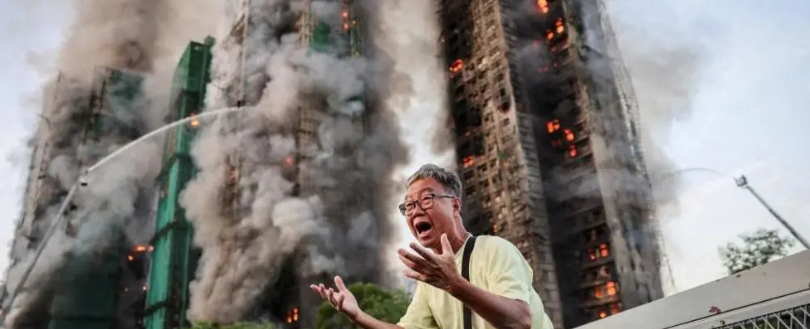
Collaborative Reporting for Safer Structures (CROSS-UK) has highlighted important lessons for the UK fire safety sector following the independent investigation into the Wang Fuk Court fire in Hong Kong in November 2025.
The fire, which claimed 168 lives, affected seven residential blocks undergoing major refurbishment works. The Independent Committee's findings highlight significant concerns around the management of fire risks during refurbishment, particularly in occupied residential buildings.
Key findings from the investigation
The investigation concluded that the fire most likely started when a discarded cigarette ignited combustible materials on a flat roof.
The subsequent rapid spread of fire was attributed to several contributing factors, including non-fire-retardant scaffolding netting, combustible window coverings, accumulated construction waste and the arrangement of temporary scaffolding around the buildings.
The investigation also identified wider fire safety failings. Temporary openings between protected staircases and external scaffolding compromised escape routes, while fire alarm and firefighting systems had been disabled or inadequately managed.
The decision to undertake refurbishment works across multiple occupied buildings simultaneously further increased the potential risks to residents.
Shortcomings in fire safety management and oversight
The Independent Committee identified serious shortcomings in contractor management, professional supervision and regulatory oversight.
These included:
- The deliberate substitution of compliant materials with unsuitable alternatives.
- Inadequate verification of the fire performance of construction products.
- Failure to respond effectively to concerns raised by residents.
- Registered professionals signing statutory documentation without carrying out adequate supervision.
The report recommends stronger controls over temporary construction materials, independent verification of product certification, improved protection of escape routes and more effective management of fire safety systems during refurbishment works.
It also highlights the importance of adopting a phased approach to refurbishment projects involving multiple occupied buildings.
Lessons for the UK fire safety sector
The findings serve as an important reminder that fire safety must be maintained throughout a building's lifecycle, including during construction, maintenance and refurbishment.
Refurbishment works can introduce new fire risks, create additional routes for fire spread and compromise existing fire protection measures. These risks must be identified, assessed and effectively managed, particularly where buildings remain occupied.
For UK fire safety professionals, the investigation reinforces the importance of robust fire risk management, competent supervision, appropriate product selection and effective regulatory oversight.
It also underlines the need for clear accountability, professional integrity and effective communication between contractors, building owners, responsible persons and residents.
The FIA continues to emphasise the importance of maintaining effective fire safety measures throughout refurbishment works, ensuring that the safety of occupants remains a priority at every stage.
View the source
Our eNews provides regular insight into industry trends, news headlines, and product and service information. For more articles like this Subscribe to our enews.