

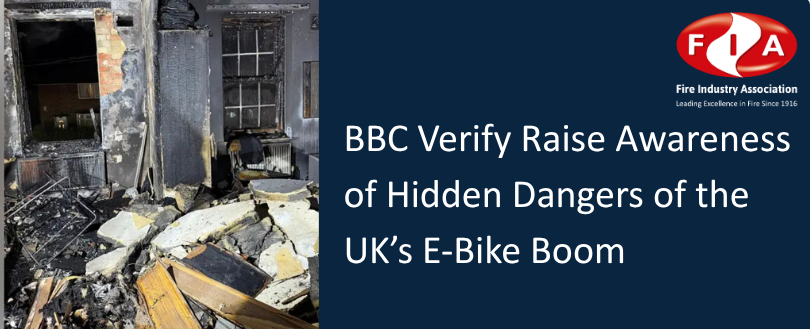
18 Deaths From Battery Fires Show Hidden Danger of UK's E-Bike Boom
Like it? Share it!
28 August 2026
New data has highlighted the growing fire safety risks associated with e-bikes, e-scooters and their lithium-ion batteries, with 18 people reported to have died and almost 700 injured in related fires across the UK.
Figures obtained by BBC Verify through Freedom of Information requests show that more than 2,000 fires involving e-bikes, e-scooters or their batteries were recorded by UK fire and rescue services between 2019 and 2025.
The number of incidents has increased significantly over this period, rising from 32 fires in 2019 to 605 in 2025. Nearly half of the fires recorded started in homes or garages, underlining the potentially serious consequences when lithium-ion battery fires occur in residential settings.
Fatal incidents have included people becoming trapped inside their homes, suffering fatal injuries while attempting to escape from height, and dying as a result of smoke inhalation.
London recorded the highest number of incidents, with 793 fires reported over the seven-year period. This was followed by Manchester with 128, West Yorkshire with 93, Merseyside with 74 and Avon with 73.
London Fire Brigade Assistant Commissioner Pam Oparaocha told BBC Verify that the service is “increasingly concerned by the significant fire risk” some e-bikes and e-scooters can pose.
Investigations by the Brigade have found that a number of incidents involved second-hand vehicles or e-bikes that had been modified using components purchased online.
This is an important distinction. Millions of people use e-bikes and e-scooters safely, and lithium-ion batteries are widely used across many everyday products. However, the risk of fire can increase significantly where batteries or chargers are damaged, incompatible, poorly manufactured or have been modified.
The rapid development of a lithium-ion battery fire can make these incidents particularly dangerous. If a battery enters thermal runaway, it can release significant amounts of heat and potentially flammable and toxic gases, allowing a fire to develop and spread very quickly.
The increasing popularity of e-bikes makes awareness of these risks increasingly important. According to the Bicycle Association, an average of 153,000 new e-bikes have been added to UK roads each year since 2020.
Consumers should take particular care when purchasing e-bikes, e-scooters, replacement batteries, chargers and conversion kits, particularly through online marketplaces or when buying second-hand products.
Lithium-ion batteries supplied for these vehicles in the UK must meet relevant product safety requirements. The Government’s Buy Safe, Be Safe campaign advises consumers to purchase from reputable sellers, check for appropriate UKCA or CE product safety markings, and ensure that batteries and chargers are compatible with the product they are intended for.
Users should also avoid modifying batteries or electrical systems and should stop using a battery if there are signs of damage, excessive heat, swelling, unusual smells or other indications that it may be failing.
The latest figures reinforce the importance of taking lithium-ion battery fire safety seriously throughout the lifecycle of a product from manufacture and sale through to charging, storage, maintenance and eventual disposal.
As the use of battery-powered products continues to grow, ensuring that products are safe, correctly used and appropriately maintained will remain an important part of reducing the risk of fire and protecting lives and property.
View the source.
Our eNews provides regular insight into industry trends, news headlines, and product and service information. For more articles like this Subscribe to our enews.